Weather Patterns Shaping Performance Edges in Turf Sprints and Premier League Scoring
Tina Bennett · Aug 25, 2026
Weather Patterns Shaping Performance Edges in Turf Sprints and Premier League Scoring
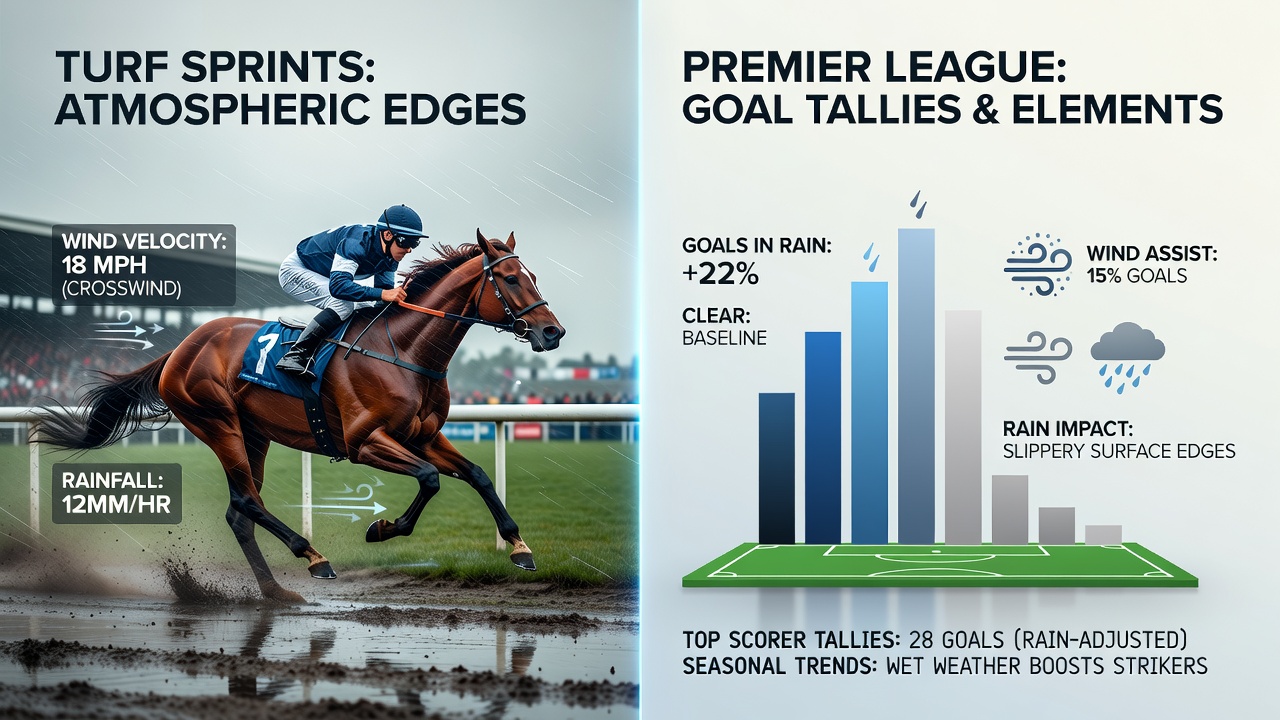
Atmospheric conditions play a measurable role in both turf sprint outcomes on British racecourses and goal tallies across Premier League matches, with variables such as wind speed, air pressure, humidity, and temperature altering track surfaces, horse effort, and ball trajectory in consistent patterns that data analysts track season after season. Research from meteorological agencies and sports performance studies shows these factors combine to create repeatable edges rather than random noise, especially during the summer months when racing calendars and football pre-seasons overlap.
Wind and Pressure Effects on Turf Sprint Times
Wind direction and velocity directly influence sprint results on turf tracks because horses running into headwinds expend extra energy over the final furlongs while tailwinds provide measurable assistance. Studies conducted at tracks like Ascot and Newmarket indicate that sustained winds above 15 mph from the prevailing direction can add or subtract up to 0.4 seconds from typical sprint times over five or six furlongs, and trainers adjust their expectations accordingly when entries face specific weather forecasts. Air pressure changes compound these effects because lower pressure often accompanies softer ground conditions that slow overall times, whereas high-pressure systems frequently coincide with firmer surfaces that favor front-running types.
Temperature further modulates these dynamics since warmer air in August reduces oxygen density at ground level, which can slightly diminish equine stamina during maximum-effort sprints. Observers note that horses with proven ability on fast ground tend to maintain their edge when temperatures climb above 22°C, while those preferring softer conditions show declining strike rates under the same heat. Humidity levels add another layer because elevated moisture content in the air increases perceived effort for both horse and jockey, particularly when combined with firm turf that offers less cushioning.
Atmospheric Variables in Premier League Goal Production
Premier League matches exhibit parallel sensitivities to atmospheric shifts because wind affects ball flight paths and goalkeeper positioning while precipitation alters pitch grip and passing accuracy. Data compiled across multiple seasons reveals that matches played in wind speeds exceeding 20 mph produce fewer total goals on average, largely due to disrupted set-piece delivery and reduced through-ball success rates. Temperature swings also register in scoring patterns, with cooler evenings in late summer correlating to slightly higher goal counts as player muscle elasticity improves and fatigue accumulates more slowly.
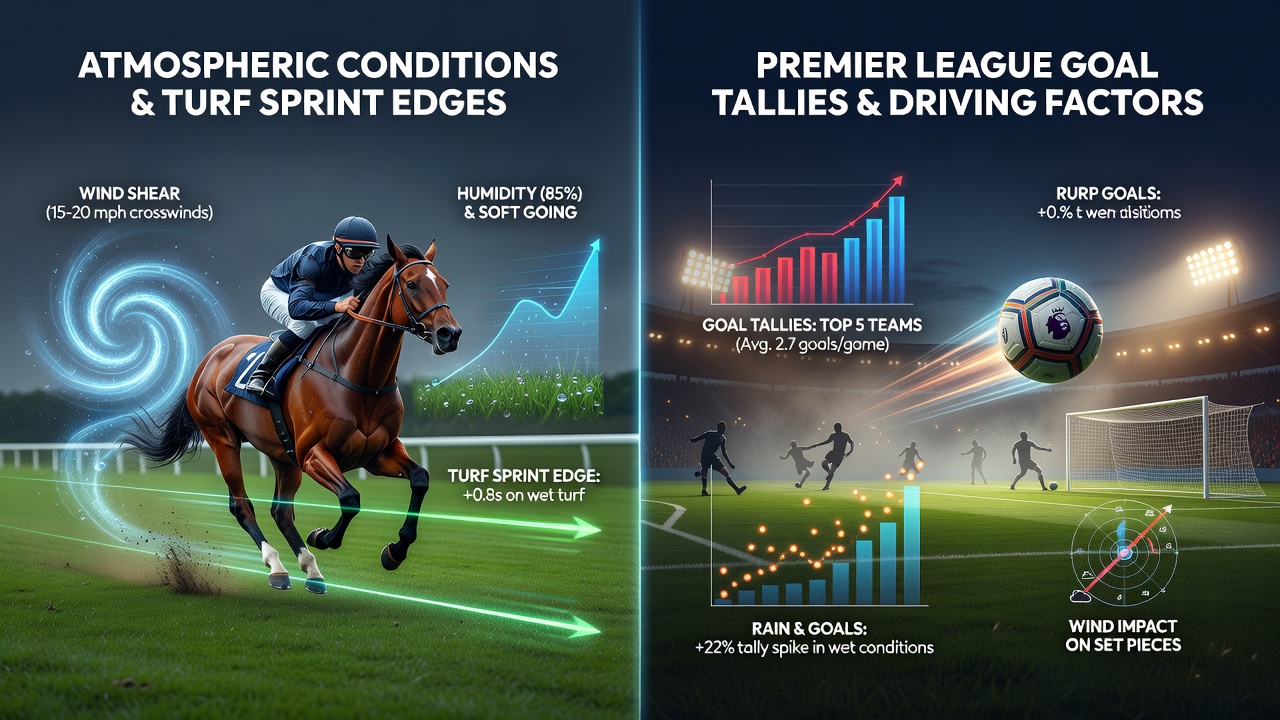
Humidity influences ball behavior as well since moist air increases drag on the ball during longer passes and shots, which can reduce the effectiveness of long-range attempts that teams rely on for surprise goals. Research published by sports science departments at universities in Australia and Canada demonstrates that relative humidity above 75 percent correlates with a modest decline in shots on target across multiple leagues, including the Premier League. Air pressure variations similarly affect early-season fixtures when teams travel between venues with differing altitudes, though the impact remains smaller than wind or precipitation effects.
Integrated Data Patterns Across Both Sports
Analysts who cross-reference weather records with performance databases find overlapping trends where high-pressure days with light winds tend to produce faster sprint times on turf and slightly elevated goal tallies in football, whereas low-pressure systems with rain suppress both outcomes. August 2026 fixtures illustrate these connections clearly because many racecourses host evening sprints while Premier League clubs play under similar late-summer conditions across the country. Teams and trainers that incorporate localized forecast models into their preparation routines gain measurable advantages, particularly when opposing sides overlook the same variables.
Government weather services in the United States and the European Centre for Medium-Range Weather Forecasts supply granular data that betting analysts and performance teams now integrate into their models. These sources provide hourly updates on wind gusts, pressure gradients, and precipitation probability that allow precise adjustments to expected times and goal projections. Industry reports from academic institutions further confirm that systematic inclusion of atmospheric data improves predictive accuracy beyond traditional form and pace figures alone.
Conclusion
Atmospheric conditions therefore function as consistent modifiers rather than isolated variables in both turf sprint racing and Premier League goal production. Those who integrate wind, pressure, temperature, and humidity data into their evaluations identify recurring patterns that persist across seasons, and August 2026 continues to highlight these relationships as fixtures unfold under varying summer weather. External sources such as the National Oceanic and Atmospheric Administration and peer-reviewed studies from Canadian universities supply the foundational records that support these observations.