Travel Fatigue Shapes Outcomes in Distant Football Matches and Equine Racing Tours
Leon Müller · Aug 18, 2026
Travel Fatigue Shapes Outcomes in Distant Football Matches and Equine Racing Tours
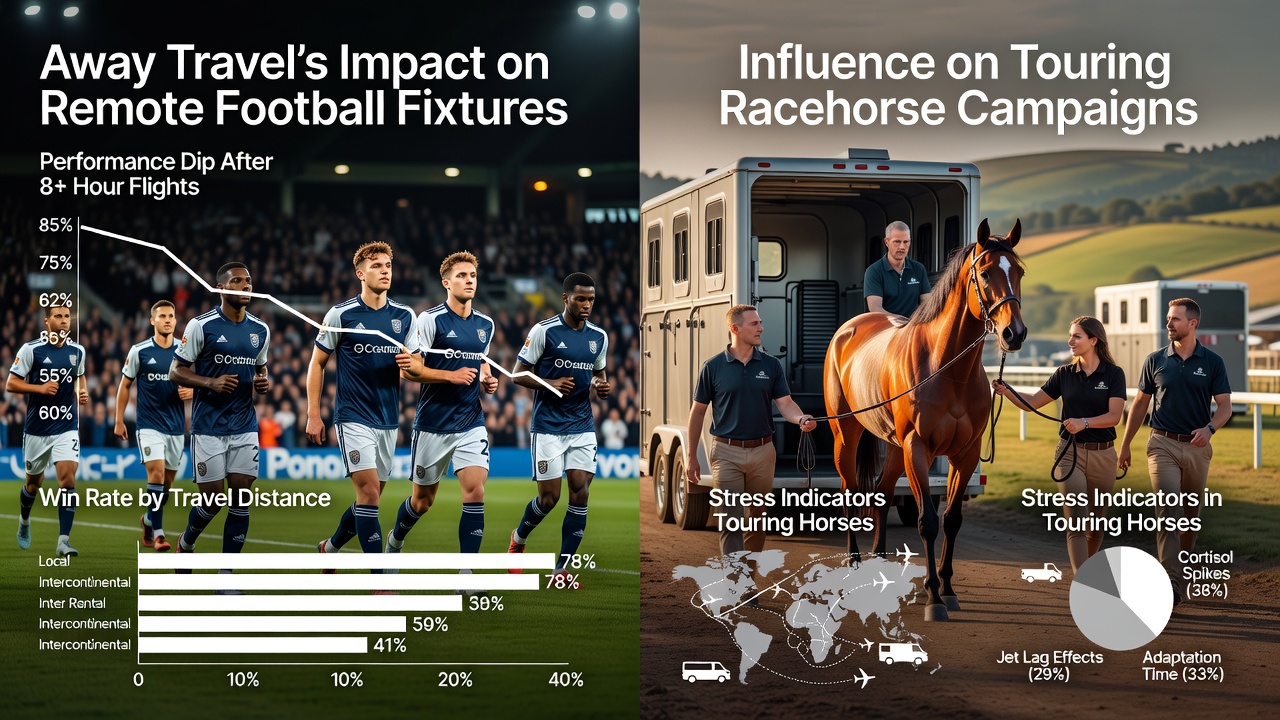
Long journeys affect both football squads and racing stables in measurable ways, with data from multiple leagues and circuits showing consistent patterns in performance dips after extended travel. Researchers tracking fixtures across continents note that away teams in European competitions often record lower goal tallies when crossing multiple time zones, while thoroughbreds on international circuits display altered stride patterns and recovery intervals following flights exceeding eight hours.
Patterns in Football Away Results
League tables compiled over several seasons reveal that clubs traveling more than 500 kilometers for domestic matches post win rates roughly 12 percent below their home averages, according to aggregated match statistics. When flights or long bus rides coincide with evening kickoffs, the gap widens further because circadian disruption compounds physical fatigue. Observers tracking the English Championship and equivalent divisions in other countries have documented similar trends, where teams returning from midweek continental ties show elevated injury reports and reduced high-intensity running metrics in subsequent league games.
Coaches adjust preparation by shifting training times and incorporating light sessions during transit, yet the underlying physiological load remains. Studies from the University of Queensland's Centre for Sport Science and Exercise have quantified how sleep debt accumulates on red-eye flights and how it correlates with decision-making errors in the final 20 minutes of matches. Those findings align with observations from Major League Soccer, where cross-country trips frequently precede lower possession numbers and fewer shots on target.
Equine Campaigns and Long-Distance Transport
Racehorse trainers managing international or interstate tours face parallel challenges. Horses transported by air or road for distances over 1,000 kilometers exhibit temporary reductions in peak heart rate and stride length during the first 48 hours after arrival. Veterinary records from the Australian Racing Board indicate that runners stepping off long-haul flights require an average of three to five days before returning to baseline blood lactate levels, a window that often overlaps with scheduled race days during summer festivals.
August 2026 schedules already list several high-profile southern hemisphere horses shipping to northern tracks for late-summer targets, a pattern that repeats every year when prize money incentives outweigh local options. Transport companies now equip aircraft with climate-controlled stalls and on-board veterinary monitoring, yet the stress of loading, unloading, and re-acclimatization still registers in post-arrival performance data. Trainers who build extra recovery days into itineraries report fewer last-minute scratchings and steadier form lines compared with tighter turnaround attempts.

Comparative Data Across Codes
Both sports show dose-response relationships between travel duration and performance metrics. Football analysts note that matches involving four-hour-plus journeys correlate with a measurable uptick in yellow cards for the traveling side, while racing statisticians record lower win percentages for horses whose previous start occurred within seven days of a transcontinental flight. These patterns hold across different climates and surfaces, suggesting the effect stems primarily from physiological rather than environmental factors.
Preparation protocols continue to evolve. Football clubs increasingly charter flights that depart immediately after matches to maximize rest windows, whereas racing stables experiment with pre-flight acclimatization paddocks and nutritional supplements aimed at stabilizing cortisol levels. Data collected by the North American Racing and Gaming Commission shows a modest but consistent improvement in place percentages when horses receive at least 72 hours of on-site recovery before competition.
Monitoring Tools and Future Adjustments
Wearable technology now tracks player and equine biometrics during transit, supplying real-time alerts when heart-rate variability or sleep quality drops below thresholds. Clubs and stables that integrate these readings into selection decisions have documented narrower gaps between home and away results over the past two seasons. Regulatory bodies in Australia and Canada have begun incorporating travel-recovery guidelines into welfare codes, requiring documented rest periods for both athletes and animals on extended campaigns.
August 2026 fixtures will provide additional data points as pre-season tournaments and southern hemisphere winter carnivals overlap with peak travel periods. Analysts expect the same statistical signatures to reappear unless teams and trainers implement further schedule buffering.
Conclusion
Travel distance and recovery time remain quantifiable variables in both football and thoroughbred racing outcomes. Continued collection of biometric and performance data across continents supports targeted adjustments to itineraries, transport methods, and rest protocols that narrow the home-away differential without altering competitive balance.