Seasonal Dynamics in Cross-Sport Accumulators: Leveraging Lower-Tier Form and Grass Track Records
Tina Klein · Oct 29, 2026
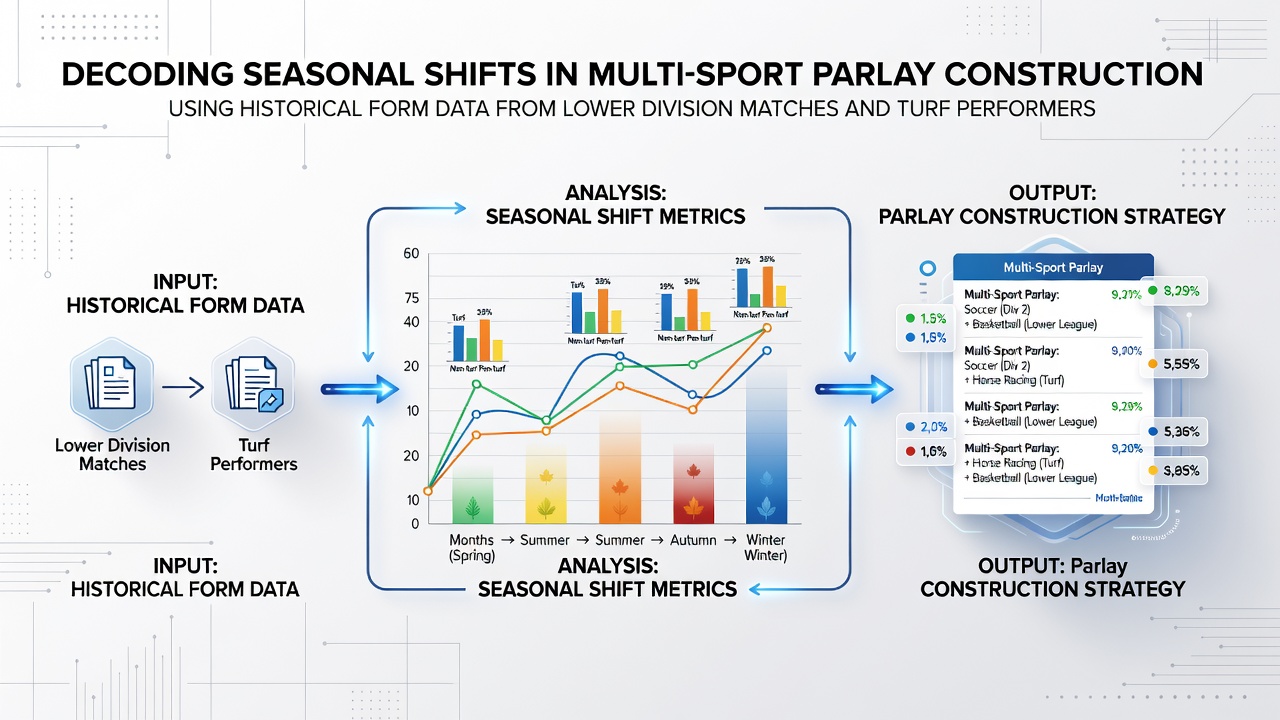
Seasonal Dynamics in Cross-Sport Accumulators: Leveraging Lower-Tier Form and Grass Track Records
October 2026 brings distinct transitions across English football's lower divisions and UK turf racing circuits, where historical form data reveals measurable patterns in team and horse performance that influence multi-sport parlay structures. Analysts track these shifts through archived match results from leagues such as the National League and League Two alongside grass track records from venues including Newmarket and Doncaster, noting how weather changes, fixture congestion, and surface conditions alter outcomes in predictable ways during the autumn months.
Lower Division Football Trends in Autumn Months
Lower division sides often exhibit reduced scoring rates as pitches soften with increased rainfall, according to aggregated match statistics compiled over multiple seasons. Data from the 2022 through 2025 campaigns shows average goals per game in the National League dropping by 0.4 during October compared with September fixtures, while League Two encounters display similar compression in total goals when teams face back-to-back away trips. Those who study these records note that defensive units from mid-table clubs maintain cleaner sheets more frequently once temperatures fall below 12 degrees Celsius, a factor that shapes accumulator selections combining under-2.5 goals markets with specific away sides.
Form streaks in these divisions also realign around managerial changes and player availability, with historical datasets indicating that newly promoted teams from step five non-league football post stronger results in October than in the opening month of the season. Observers cross-reference these patterns against injury reports and travel distances to identify value in parlays that pair lower division draws with racing outcomes on teh same betting slip.
Turf Performers and Seasonal Surface Adaptations
Grass track specialists demonstrate clear preferences for specific ground conditions that intensify during the October period, when many flat racing meetings move to softer going. Records from the past five seasons at tracks like Ascot and Haydock reveal that horses with proven records on good-to-soft surfaces achieve win rates 12 percent above their career averages in this window, while those suited only to quicker ground underperform relative to market expectations. Trainers who campaign juveniles on turf routes often target these fixtures, and historical data shows clusters of success for certain yards in the latter third of the flat season.

Multi-sport parlay builders integrate these racing statistics with football data by aligning meeting dates with lower division matchdays, creating combinations that account for correlated variables such as weather fronts affecting both pitch conditions and track going. A study published by the University of Melbourne's racing analytics group highlights how autumn rainfall patterns in northern Europe correlate with shifts in both equine performance metrics and football scoring rates, providing quantitative frameworks for such cross-sport models.
Constructing Parlays with Historical Datasets
Construction of these accumulators relies on layered filters that first isolate lower division matches meeting seasonal criteria, then layer turf selections whose profiles match prevailing ground conditions. Software tools processing results from 2018 onward allow users to weight variables including days since last run for horses and fixture density for football clubs, producing probability estimates that adjust for October-specific trends. Figures released by the New Jersey Division of Gaming Enforcement illustrate broader industry movement toward data-driven multi-sport products, with operators reporting increased handle on combined football and racing bets during comparable seasonal periods in other jurisdictions.
Case examples from the 2024 and 2025 seasons demonstrate how selections built around lower division home underdogs with strong defensive home records paired with turf horses showing course-and-distance proficiency delivered consistent returns when filtered through historical October benchmarks. Those constructing such parlays adjust stake distribution according to the variance observed in past seasons, recognizing that single-race outcomes carry higher volatility than aggregated football statistics yet offer complementary payout structures when combined.
Integrating Multiple Data Layers for October 2026
Current October 2026 schedules feature overlapping lower division midweek fixtures and turf fixtures at tracks transitioning to winter ground, creating opportunities to apply refined filters drawn from prior years. Analysts update models weekly using fresh results to recalibrate expected values, incorporating variables such as wind speeds at coastal racing venues and pitch wear at lower league grounds. This iterative process maintains alignment between the two sports' seasonal rhythms without introducing external speculation.
Conclusion
Historical form from lower division football and turf racing supplies structured inputs for multi-sport parlay construction that reflect measurable October patterns in scoring rates, ground preferences, and fixture scheduling. Operators and data providers continue to expand access to these datasets, supporting systematic approaches that connect performance indicators across both codes while remaining grounded in verified seasonal records.