Fatigue Dynamics in Overloaded Football Fixtures and Corresponding Effects in Consecutive Flat Racing Events
Tina Bennett · Jun 2, 2026
Fatigue Dynamics in Overloaded Football Fixtures and Corresponding Effects in Consecutive Flat Racing Events
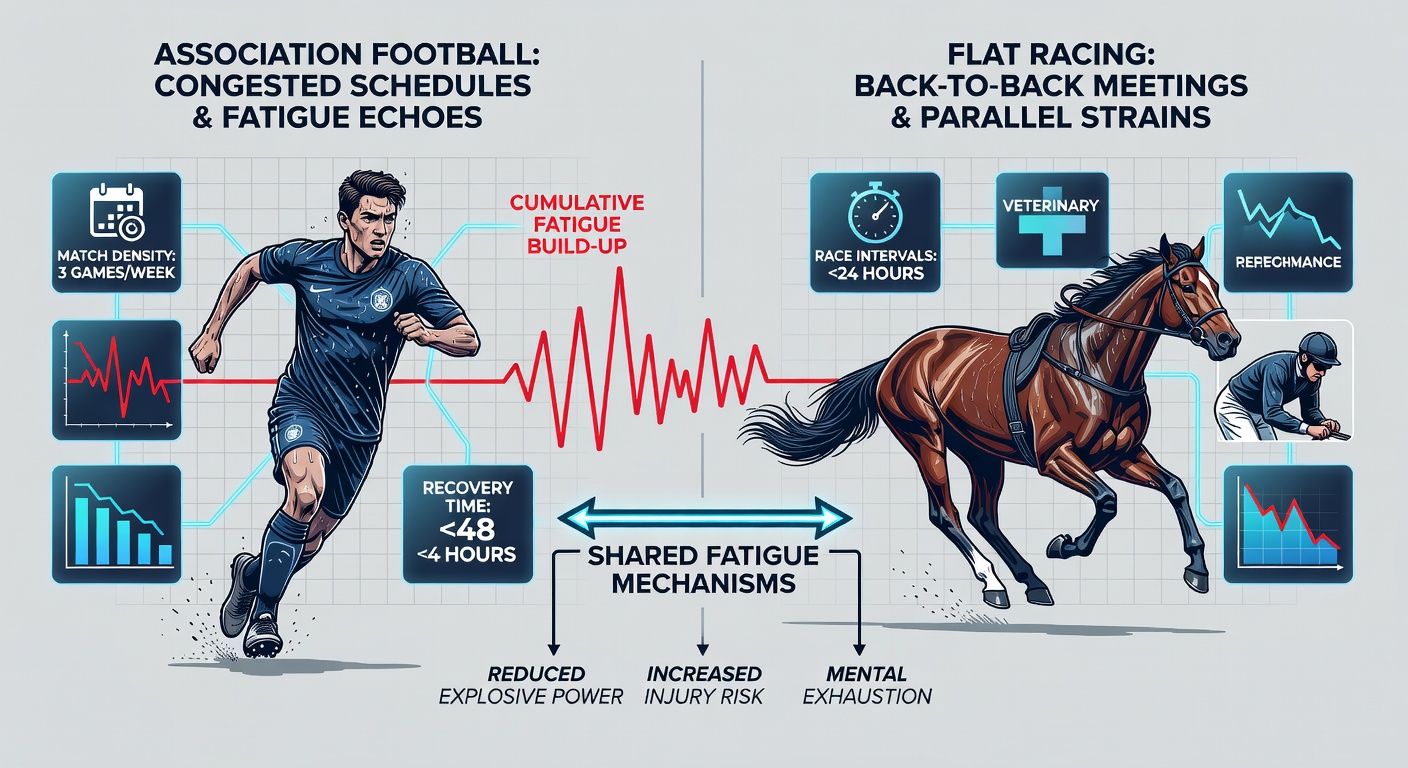
Association football calendars pack multiple competitions into single seasons, while flat racing circuits often schedule meetings on successive days at the same or nearby venues, and researchers track how these patterns generate measurable fatigue across both domains. Studies from sports science programs document elevated injury rates when teams play three or more matches within seven days, and similar monitoring in equine athletics reveals performance drops after horses compete on back-to-back cards without adequate rest intervals. Data compiled by FIFA across international windows shows that clubs participating in domestic leagues plus continental tournaments face fixture densities exceeding 50 matches per campaign for key squads, creating recovery windows that sometimes shrink below 72 hours between high-intensity efforts.
Player Workload Patterns in Modern Football
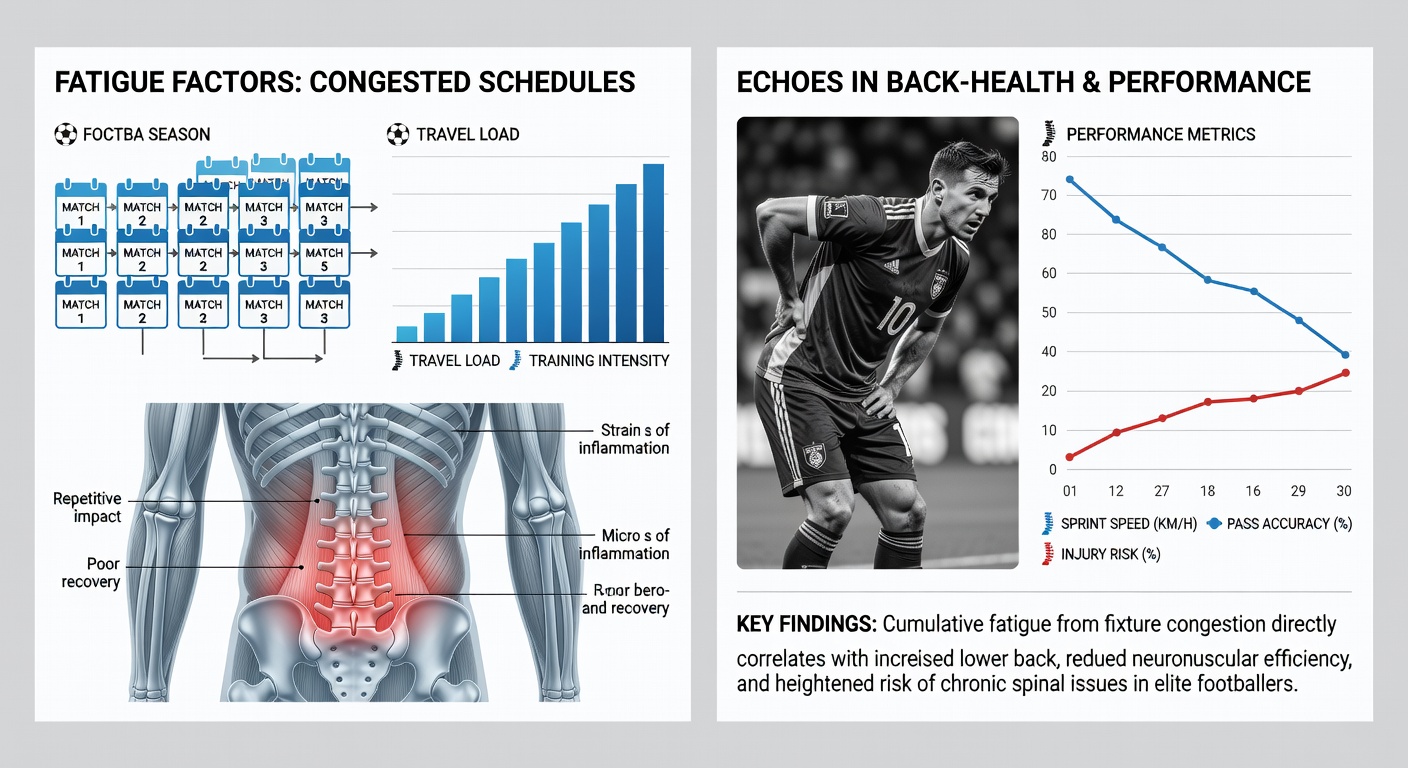
European leagues illustrate the issue clearly during winter months when weather delays compress already tight timetables, and analysts note that midfielders accumulate the highest total distances under these conditions because they cover both defensive and transitional zones repeatedly. A 2024 report issued by the Union of European Football Associations quantified average sprint counts rising by 12 percent in teams forced into midweek fixtures, while muscle strain incidents increased proportionally during the subsequent weekend rounds. Observers note that goalkeepers experience different stressors yet still register elevated heart-rate recovery times when matches cluster, since their explosive actions occur in shorter bursts but with less overall downtime between events. National team call-ups further fragment club preparation periods, and governing bodies have introduced mandatory rest protocols after major tournaments though enforcement varies by competition level.
Recovery Metrics and Monitoring Tools
Clubs now deploy GPS tracking, heart-rate variability readings, and blood biomarker panels to flag early fatigue signs before they translate into lost availability, and these systems generate datasets that sports medicine teams review daily during peak congestion. Research conducted at universities in Australia and Canada demonstrates that sleep disruption compounds physical load when travel follows evening kickoffs, producing measurable declines in next-day reaction times for athletes returning from international duty. Teams that rotate squads strategically maintain more consistent output across congested blocks, whereas those relying on the same starting eleven show steeper drops in high-speed running metrics by the third match in a sequence. External links to such findings appear in publications from the FIFA medical network and academic repositories hosted by institutions studying exercise physiology across continents.
Parallels in Successive Flat Racing Meetings
Flat racing programs at British and Irish tracks frequently list consecutive afternoon cards at venues such as Newmarket or Leopardstown, and trainers must decide whether to run the same horse on both days or insert rest periods that might affect overall campaign targets. Performance records maintained by racing authorities indicate that horses competing on two consecutive days post lower average speed figures on the second outing, particularly when the first race involved a strong pace or extended distance. Jockeys themselves operate under similar constraints because they often ride multiple mounts across both meetings, and physiological monitoring of riders shows cumulative fatigue affecting decision-making in later races on the second afternoon. Weather conditions, track surfaces, and travel between courses add layers that mirror the variables football teams encounter when crossing time zones or playing on artificial pitches after natural grass.
Shared Physiological Responses Across Disciplines
Both human athletes and thoroughbreds exhibit elevated creatine kinase levels after repeated maximal efforts, and veterinary plus medical literature records parallel recovery timelines when rest intervals fall below 48 hours. Trainers in racing have begun adopting wearable sensors on horses that track stride length and heart-rate recovery much like football clubs monitor player workloads, allowing objective decisions about whether a second-day entry remains viable. June 2026 will feature dense European club schedules overlapping with the start of the FIFA World Cup cycle in North America, while several major flat meetings cluster around the same calendar window, prompting analysts to examine whether cross-sport fatigue models can predict outcomes more accurately than traditional form study alone. Breeders and owners weigh these factors when planning entries, just as football managers balance squad depth against fixture lists published months in advance by league organizers.
Data Integration and Predictive Approaches
Statistical models that combine match density with travel distance and previous workload produce probability estimates for performance decline that both betting markets and team staff consult regularly, and publications from the British Horseracing Authority archive provide granular datasets on consecutive-day runners that mirror the match-log archives kept by football leagues. When these datasets are overlaid, common inflection points emerge around the 72-hour recovery threshold, after which measurable decrements stabilize for both species provided nutrition and sleep protocols remain consistent. Smaller tracks and lower-division football clubs sometimes lack access to advanced monitoring equipment, yet basic rotation strategies still yield measurable benefits according to longitudinal injury audits conducted across multiple seasons.
Conclusion
Examination of congested schedules reveals consistent patterns linking fixture density to reduced output in association football and back-to-back flat racing, with physiological markers, performance statistics, and recovery timelines showing convergent trends across the two sports. Continued collection of objective data through wearable technology and centralized reporting systems allows stakeholders to refine scheduling guidelines and rotation policies, while June 2026 presents a live test case as overlapping international and domestic demands coincide with established racing calendars.